
Conditions
Back pain and injuries
Most back pain is not dangerous, and most of it gets better — but "most" is not "all", and the way you spend the first few weeks matters. Physical therapy is the first-line treatment that major guidelines recommend before imaging, injections or surgery for the great majority of back pain. This page says what that involves, and what needs a doctor before us.
See a doctor first
Back pain with any of the following is not a physical therapy problem first. Go to an emergency department, or call your doctor the same day:
- New difficulty controlling your bladder or bowel, or numbness in the groin or inner thighs
- Weakness in a leg that is getting worse, or a foot that drags
- Back pain after a fall, a crash, or a significant impact — especially if you are over 65 or have osteoporosis
- Pain with fever, unexplained weight loss, or a history of cancer
- Severe pain at night that does not ease when you change position
What we see most
Back conditions we treat, and what therapy does for each.
Non-specific low back pain
The most common kind: pain in the lower back, sometimes into the buttock, with no single structure clearly to blame. It is frequently triggered by a lift, a twist, or nothing at all.
What therapy does: This is where physical therapy has its strongest case. The evidence favors staying active, graded exercise and hands-on treatment over rest, and most people improve substantially within six weeks. We work out which movements ease your pain, load you gradually, and teach you how to keep it from returning.
Sciatica and herniated discs
Pain, tingling or numbness traveling down the back of one leg, often below the knee, caused by a nerve root being irritated — most often by a bulging or herniated disc.
What therapy does: Most herniated discs shrink and most sciatica settles without surgery, usually over several weeks to months. Therapy centers on movements that reduce leg symptoms, nerve-gliding exercises, and progressive strengthening. If leg weakness is progressing or symptoms are not moving after a genuine trial, we say so and involve your physician.
Spinal stenosis
Narrowing of the spinal canal, mostly in people over 60. The typical picture is leg heaviness or pain that comes on with walking and standing and eases when you sit or lean forward on a shopping cart.
What therapy does: Therapy cannot widen the canal, and we will not claim it can. What it reliably does is improve how far you can walk and how well you tolerate standing, through flexion-based exercise, hip and leg strengthening, and cycling-style conditioning. That is often enough to keep people off the surgical list.
Degenerative disc disease and arthritis
Age-related change in the discs and facet joints. Common on scans after 40, and often present in people with no pain at all — which is why we treat the person, not the report.
What therapy does: Imaging findings here correlate poorly with pain, so the plan is built around what you can and cannot do. Strength, mobility and pacing strategies reduce flare-ups; we also help you understand which scan findings are simply normal aging.
Post-surgical rehabilitation
Recovery after discectomy, laminectomy or spinal fusion. Each surgeon has a protocol, and the protocol comes first.
What therapy does: We follow your surgeon's restrictions to the letter, then progress you through the phases: protecting the repair, restoring movement, rebuilding strength and, finally, returning to work, sport or lifting. Because it is one practice, your plan carries across any of our clinics.
Do you need a scan first?
Usually not. For back pain without red-flag symptoms, guidelines from the American College of Physicians and NICE advise against routine imaging in the first six weeks, because X-rays and MRIs of the low back very often show disc bulges and degeneration in people who have no pain at all. A scan that finds one of those can make a recovering back sound broken.
Your therapist will screen for the warning signs listed above at the first visit. If any are present, or if your symptoms are not behaving the way mechanical back pain should, we refer you for imaging or a physician's opinion rather than treating on.
What treatment looks like
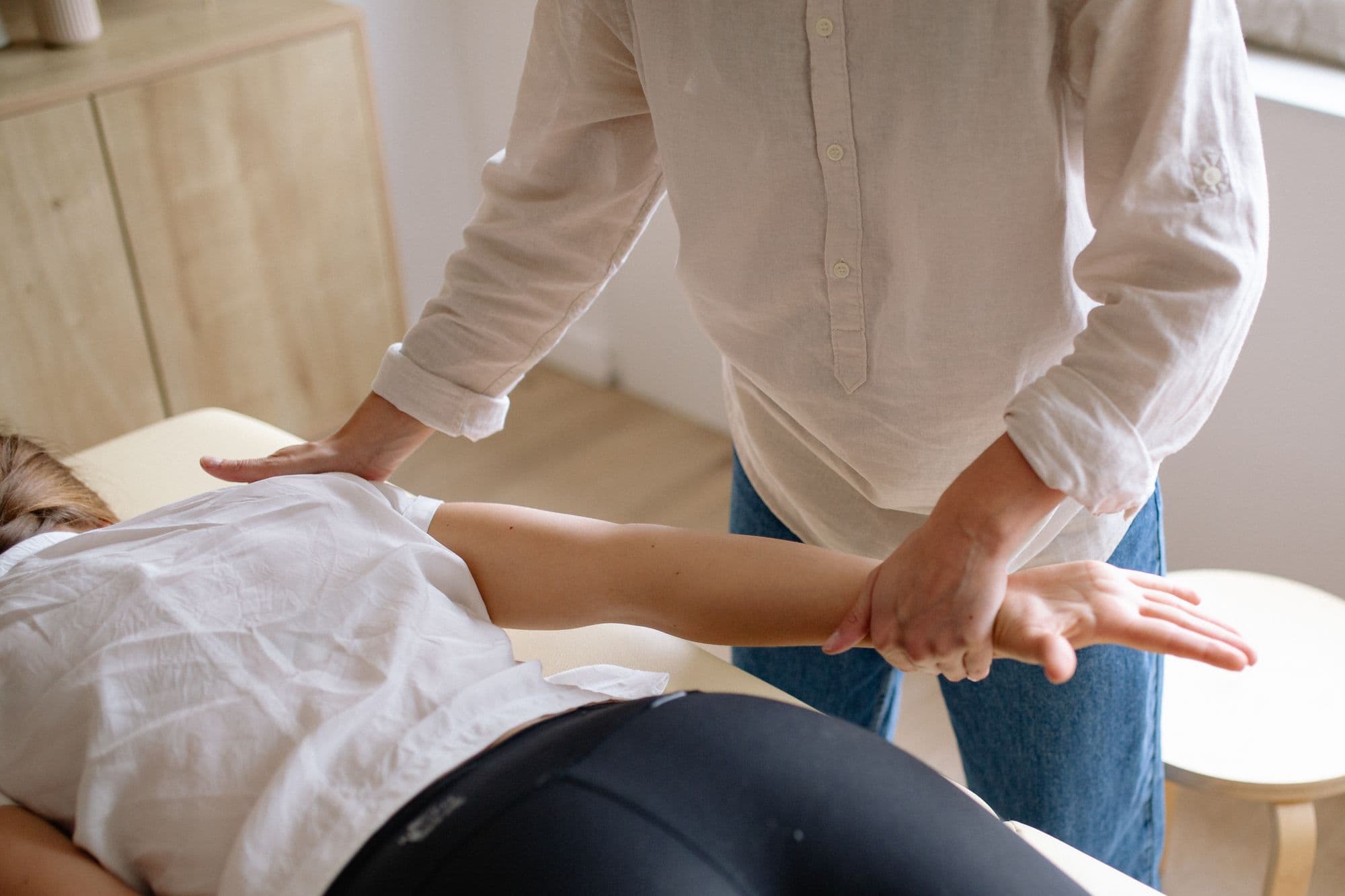
The first visit is an evaluation: your history, what makes the pain better and worse, a movement exam, a neurological check of the legs, and a plain conversation about what you want to get back to. You leave with a working diagnosis and a first set of movements to do at home.
From there, treatment is a mix of hands-on work — joint mobilization, soft-tissue techniques, sometimes dry needling — and graded exercise, with the balance shifting steadily toward exercise as you improve. Passive treatment alone does not produce lasting results for back pain; the evidence is clear that the strength and confidence you build are what keep it from coming back.
Most people are seen once or twice a week for four to eight weeks. If you are not measurably better after three or four visits, we change the plan or refer you on. Treating for months without change is not a plan.
Can you come without a referral?
Yes, in all three states we practice in. New Jersey, New York and Florida each allow direct access to a physical therapist, with time limits that mean a physician becomes involved if you are not improving — a checkpoint that exists for exactly the right reason.
How we treat it
The services that apply.
Physical Therapy
Pain and movement problems treated without drugs or surgery. Offered at every clinic.
Learn moreDry Needling
A thin-needle technique for tight muscle, used inside a wider plan — never on its own.
Learn moreAquatic Therapy
The same rehabilitation in warm water, where buoyancy lets you move and load a joint earlier.
Learn more
FAQ
Common questions
- Should I rest my back or keep moving?
- Keep moving, within what pain allows. Bed rest beyond a day or two slows recovery from back pain and weakens the muscles that support your spine. Gentle walking and the movements your therapist gives you are safer and work better than rest.
- How long does back pain take to get better with physical therapy?
- Most episodes of non-specific low back pain improve substantially within four to six weeks. Sciatica from a disc can take longer — often two to three months for leg symptoms to settle. If you are not improving after three or four visits, your plan should change.
- Is physical therapy safe if I have a herniated disc?
- Yes. Exercise-based therapy is a recommended first-line treatment for a herniated disc with sciatica, and most people recover without surgery. The exceptions are progressive leg weakness or any change in bladder or bowel control, which need a physician urgently.
- Do you treat back pain at every SportsCare clinic?
- Yes. Back and neck pain and spine rehabilitation are offered at every SportsCare location in New Jersey, New York and Florida.
Sources
- Noninvasive Treatments for Acute, Subacute, and Chronic Low Back Pain: A Clinical Practice Guideline — American College of Physicians (Annals of Internal Medicine, 2017)
- Low back pain and sciatica in over 16s: assessment and management (NG59) — National Institute for Health and Care Excellence
- Low Back Pain — OrthoInfo, American Academy of Orthopaedic Surgeons
- Back pain — NHS
- Lumbar Spinal Stenosis — OrthoInfo, American Academy of Orthopaedic Surgeons
This page is general information, not a diagnosis. A physical therapist at any SportsCare clinic can evaluate your specific situation.