
Services
TMJ Therapy
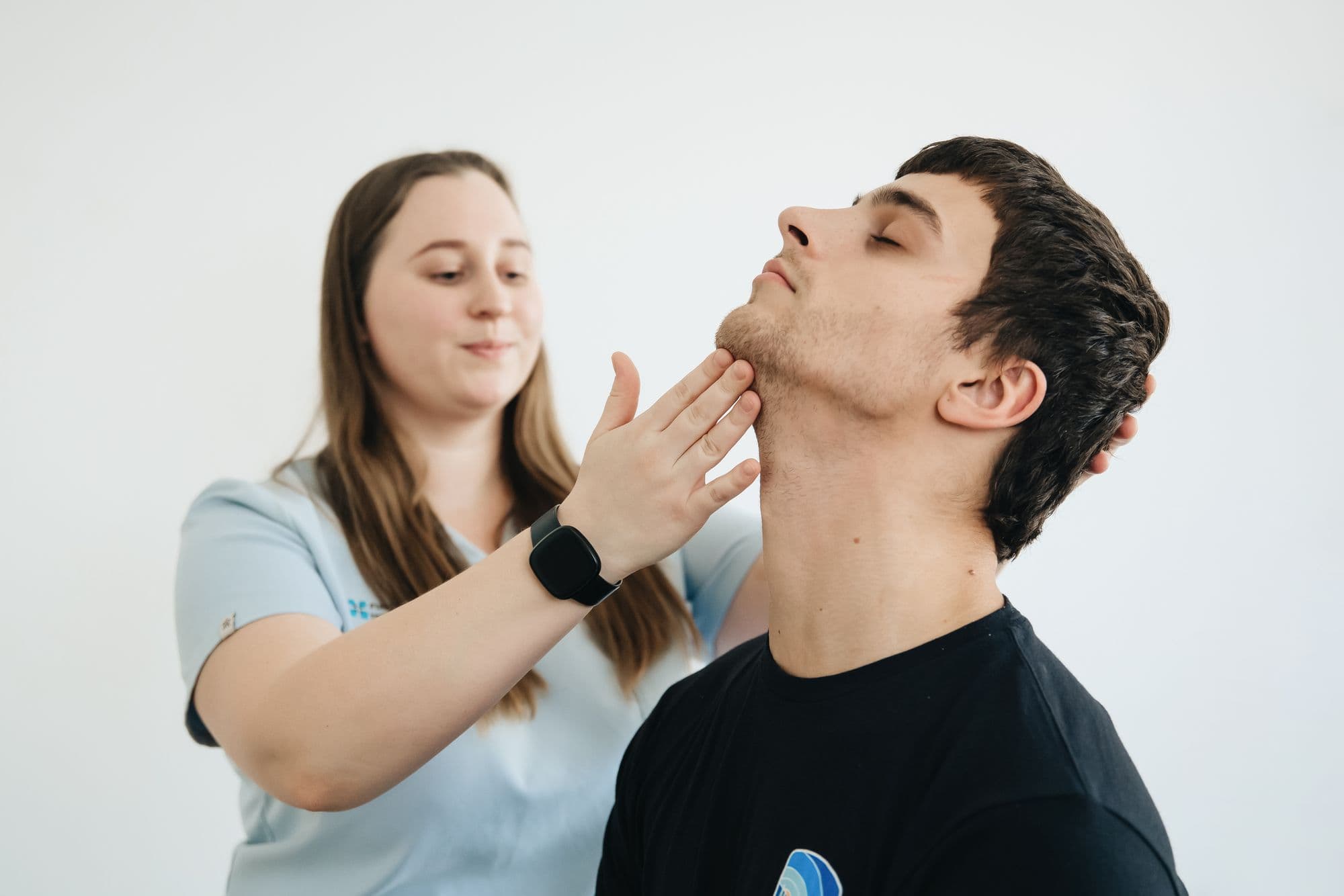
The jaw joint is the most used joint in the body and one of the least treated. Temporomandibular disorders — pain, clicking, limited opening, headaches, ear pressure — are mostly muscle and joint problems, closely tied to the neck, and they respond to the same combination that works elsewhere: hands-on treatment, specific exercise, and changing the habits that keep the joint irritated.
Why SportsCare
Why patients choose SportsCare for jaw pain
The neck is examined every time
Neck posture and upper cervical joints contribute to most jaw pain, and treating the jaw alone often fails. We assess and treat both.
Working alongside your dentist
Splints, bite issues and dental causes are your dentist's territory. We coordinate rather than compete, and we say when a dental opinion is needed first.
Honest about what is evidence-based
Manual therapy and exercise have moderate evidence for TMD pain and opening. Ultrasound and electrical stimulation have very little, and they are not the core of our treatment.
What we treat
Myofascial jaw pain from clenching and grinding. Jaw joint pain and inflammation. Clicking with or without pain, and disc displacement. Limited opening and locking. Jaw problems after whiplash, a blow to the face, or prolonged dental work. Headaches and ear symptoms that come from the jaw and neck. Recovery after jaw surgery, within your surgeon's protocol.
What the evidence says
A 2016 systematic review and meta-analysis in Physical Therapy found that manual therapy and therapeutic exercise — alone or combined — produced meaningful improvements in pain and mouth opening for TMD, with the combination of the two generally most effective. Treatment that includes the cervical spine tends to do better than treatment of the jaw alone.
For modalities such as ultrasound and electrical stimulation, the evidence is weak. They may be used to help with pain in a session, but they are not what gets you better, and a program built mainly around them is not a program we would recommend.
What treatment looks like
Evaluation
Jaw opening and deviation, joint sounds, muscle tenderness, neck posture and movement, and the habits — clenching, gum, nail-biting, phone posture — that keep the joint irritated.
Hands-on treatment
Mobilization of the jaw joint and upper neck, and soft-tissue work on the chewing muscles, inside and outside the mouth with gloves and your consent.
Exercise
Controlled opening, tongue-position and coordination drills, and deep neck-flexor strengthening. Small, precise and done several times a day.
Habit change
Teeth apart, lips together, tongue up. A night splint from your dentist where clenching is the driver. Most of the improvement comes from what you stop doing.
When to see a dentist or physician first
FAQ
Common questions
- Can physical therapy help TMJ pain?
- Yes. Manual therapy and exercise, particularly when they include the neck, improve pain and mouth opening in temporomandibular disorders according to a 2016 systematic review and meta-analysis. Most people improve over four to eight weeks.
- Should I see a dentist or a physical therapist for jaw pain?
- Both, often. Dental causes, bite problems and night splints are your dentist's role; muscle and joint treatment and the neck are ours. If you are not sure, start with whichever is easier to reach — each will refer to the other when appropriate.
- Will my jaw click go away?
- Sometimes. A painless click that has been there for years is usually not something to treat. A click that is painful, new, or accompanied by catching or limited opening often improves with treatment, though the click itself may remain.
- Which SportsCare clinics treat TMJ?
- TMJ therapy is offered across the SportsCare network in New Jersey, New York and Florida. Call the clinic nearest you to confirm a therapist with TMD training is available there.
Sources
The clinical claims on this page are drawn from the following. Where the evidence is limited, we say so above rather than round it up.
Talk to a therapist about tmj therapy
Availability varies by clinic. Call the location nearest you and the front desk will tell you whether it is offered there and whether it suits your condition — or reach our main office at (973) 887-9000.
64 clinics across New Jersey, New York and Florida.