
Services
Dry Needling
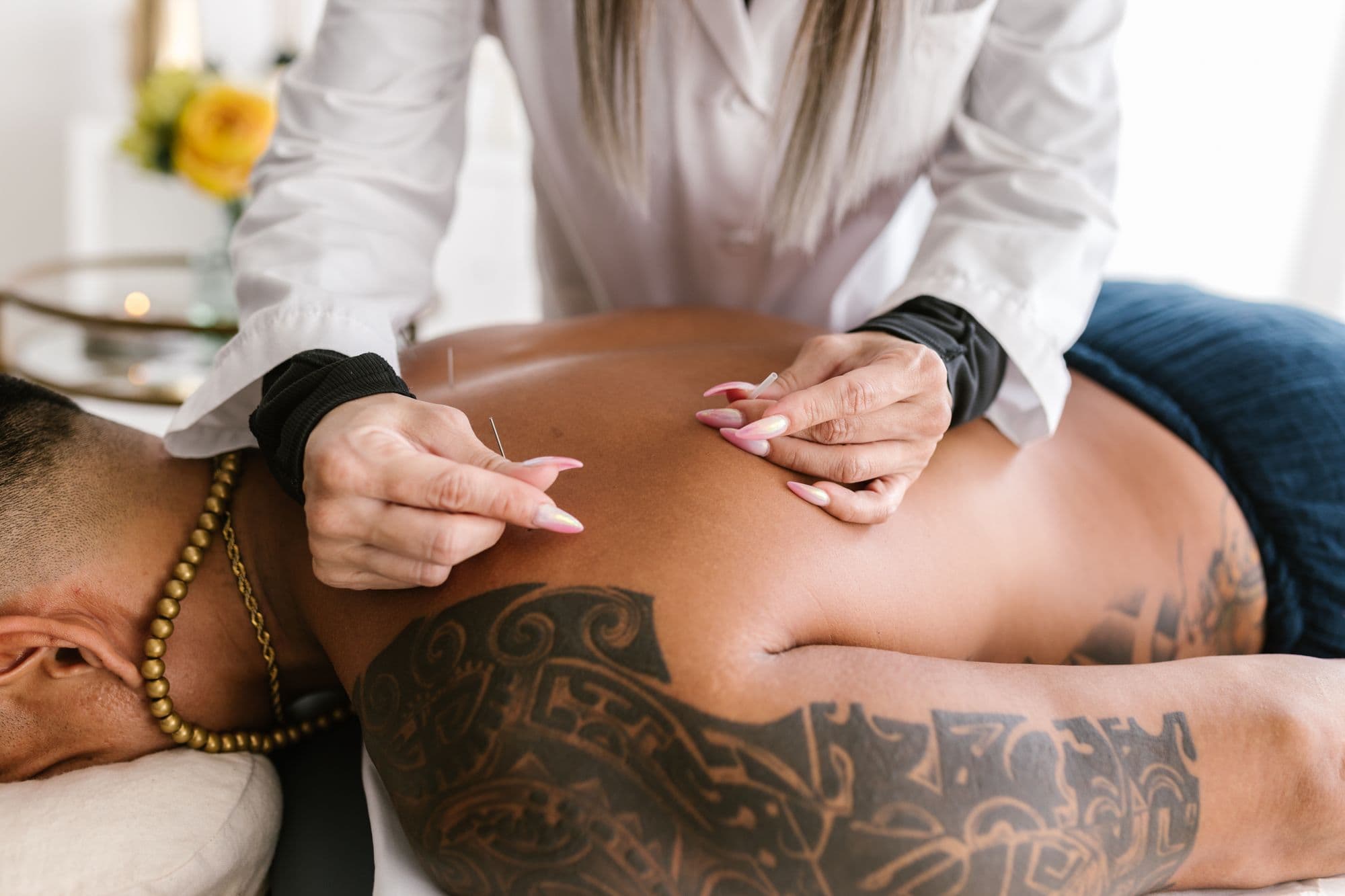
Dry needling uses a thin filament needle, inserted through the skin into a tight band of muscle, to reduce pain and restore movement. It is a hands-on technique used inside a broader physical therapy plan — not a treatment on its own.
Why SportsCare
Why patients choose SportsCare for dry needling
It is part of a plan, never the whole plan
Needling on its own helps for a short window. We use that window deliberately — to make the loading and movement work that follows it more effective.
You get a straight answer about what it can do
The evidence is genuinely modest, and you will read that on this page rather than discover it after paying for six sessions.
Assessed first, treated second
Needling follows a full evaluation. If your problem is not one a needle will help, we will tell you that at the first visit.
How it works
A physical therapist locates a taut band within a muscle — often called a trigger point — and inserts a fine, solid needle into it. No medication is injected, which is where the name comes from: the needle is "dry".
The muscle may twitch briefly when the needle reaches the band. That response is normal and usually brief. The intent is to reduce local muscle tension and pain sensitivity enough that you can move better, so the exercise and manual work that follow are more effective.
Because it is a technique rather than a treatment plan, dry needling at SportsCare is always paired with the rest of your program. On its own it tends to help for a short window; combined with loading and movement retraining, that window is used to make change that lasts.
What the evidence shows
We would rather set an accurate expectation than an appealing one, so here is the honest position.
Systematic reviews find dry needling reduces pain and improves pressure-pain threshold in musculoskeletal conditions more than sham or no treatment, though those benefits are largely short-term and the quality of evidence is low to moderate. Compared against other active treatments, one review found it comparable at three months and more effective at six.
The picture is more mixed for neck and shoulder pain specifically, where several reviews found no clinically important advantage over other physical therapy techniques. It is also worth knowing that identifying trigger points by hand has poor reliability between examiners — clinicians do not always agree on where they are.
What that adds up to: dry needling is a reasonable tool for the right patient, it is not a cure, and any clinic promising it will eliminate your pain is overstating what the research supports.
What the research supports
- Short-term reduction in pain versus sham or no treatment
- Improved pressure-pain threshold in musculoskeletal conditions
- Comparable to other active treatments at three months
- Useful as one part of a wider rehabilitation plan
What it does not
- Durable relief from needling alone, without exercise
- A clear advantage for neck and shoulder pain specifically
- Reliable agreement between clinicians on trigger point location
- High-certainty evidence — most studies are low to moderate quality
What a session is like
Before
Your therapist examines the area, explains what they have found, and confirms you are a suitable candidate. Dry needling is never the first thing that happens — it follows an evaluation.
During
Needles stay in for anywhere from a few seconds to several minutes depending on the technique. Most people describe a deep ache or a brief cramp rather than a sharp pain. Tell your therapist what you feel; the technique is adjusted to your tolerance.
Afterward
Mild soreness for 24 to 72 hours is the most common effect, sometimes with minor bruising. Heat, gentle movement and hydration usually settle it. You are typically fine to return to normal activity the same day.
Risks, and who should not have it
Mild, temporary effects — post-treatment soreness and small bruises — are reported in roughly a fifth to a third of patients. Serious complications are rare, occurring in well under one in a thousand cases, but they exist, which is why technique and training matter.
Dry needling and acupuncture are not the same thing
They both use similar needles, and that is roughly where the similarity ends.
Dry needling comes out of Western musculoskeletal medicine. Needle placement is decided by physical examination — palpating for a taut band, assessing movement patterns and orthopedic testing — and targets specific muscle tissue. It is performed by physical therapists as part of a rehabilitation plan.
Acupuncture comes out of traditional Chinese medicine, places needles along established channels, typically more superficially, and is used for a much broader range of conditions beyond musculoskeletal pain. It is performed by licensed acupuncturists.
Neither is a substitute for the other. They are different professions using a similar instrument for different reasons.
- Tradition
- Dry needlingWestern musculoskeletal medicine
- AcupunctureTraditional Chinese medicine
- Placement decided by
- Dry needlingPhysical exam and palpation of muscle
- AcupunctureEstablished channels and points
- Depth
- Dry needlingInto the muscle, at the taut band
- AcupunctureTypically more superficial
- Treats
- Dry needlingMusculoskeletal pain and movement
- AcupunctureA broad range of conditions
- Performed by
- Dry needlingLicensed physical therapists
- AcupunctureLicensed acupuncturists
FAQ
Common questions
- Does dry needling hurt?
- Most people feel a deep ache or a brief muscle cramp rather than a sharp pain. The needles are much thinner than the ones used for injections or blood draws. Tell your therapist what you are feeling — the technique is adjusted to your tolerance.
- How many sessions will I need?
- It depends on your condition and how you respond. Because the benefit tends to be short-term on its own, dry needling is used alongside exercise and manual therapy rather than as a standalone course of treatment. Your therapist will reassess as you go.
- Is dry needling covered by insurance?
- Coverage varies by plan, and some carriers treat it differently from other physical therapy techniques. Call your clinic with your insurance card and the front desk will verify your benefits before you are treated.
- Can physical therapists perform dry needling in New Jersey, New York and Florida?
- Scope of practice for dry needling is set state by state and has changed over time. Our therapists practice within their state's regulations and complete dedicated training in the technique. Ask your clinic about the specific credentials of the therapist treating you.
- How is this different from a cortisone injection?
- Nothing is injected during dry needling — no steroid, no anesthetic, no fluid of any kind. The effect comes from the needle itself interacting with the muscle tissue, not from a drug.
Sources
The clinical claims on this page are drawn from the following. Where the evidence is limited, we say so above rather than round it up.
- 1.The Effectiveness of Trigger Point Dry Needling for Musculoskeletal Conditions by Physical Therapists: A Systematic Review and Meta-analysis — Journal of Orthopaedic & Sports Physical Therapy
- 2.Treatment Guidelines and Decision Tree for Dry Needling Musculoskeletal Conditions: A Consensus Statement — PubMed Central
- 3.Current State of Dry Needling Practices: A Comprehensive Analysis on Use, Training, and Safety — PubMed Central
Talk to a therapist about dry needling
Availability varies by clinic. Call the location nearest you and the front desk will tell you whether it is offered there and whether it suits your condition — or reach our main office at (973) 887-9000.
64 clinics across New Jersey, New York and Florida.