
Services
Sports Medicine
Sports medicine at SportsCare is two things. In the clinic, it is rehabilitation that ends with a measured, tested return to your sport rather than a guess. Outside it, it is certified athletic trainers on the sideline at games, tournaments and camps, injury-prevention screening for teams, and education for the coaches and parents who see the injuries first.
Why SportsCare
Why teams and athletes choose SportsCare
Certified athletic trainers, not volunteers
Our sideline coverage is provided by certified athletic trainers (ATCs) — licensed clinicians trained to recognize and manage acute injury, including concussion, at the moment it happens.
A mobile sports medicine unit
Our van carries a treatment table, emergency supplies, an AED, taping and bracing, crutches, ice, and concussion testing equipment, with generator power and WiFi — a clinic that comes to the event.
Return to play by the numbers
Strength, hop and movement testing before clearance. Returning early after an ACL reconstruction raises the risk of re-injury, and we would rather show you the numbers than argue about the date.
Event and team coverage
SportsCare provides certified athletic trainers to games, tournaments, camps, marathons, triathlons, recreational programs, and club and travel teams. We work with high schools, colleges, adult recreational leagues, running groups, youth programs and martial arts facilities across New Jersey, New York and Florida.
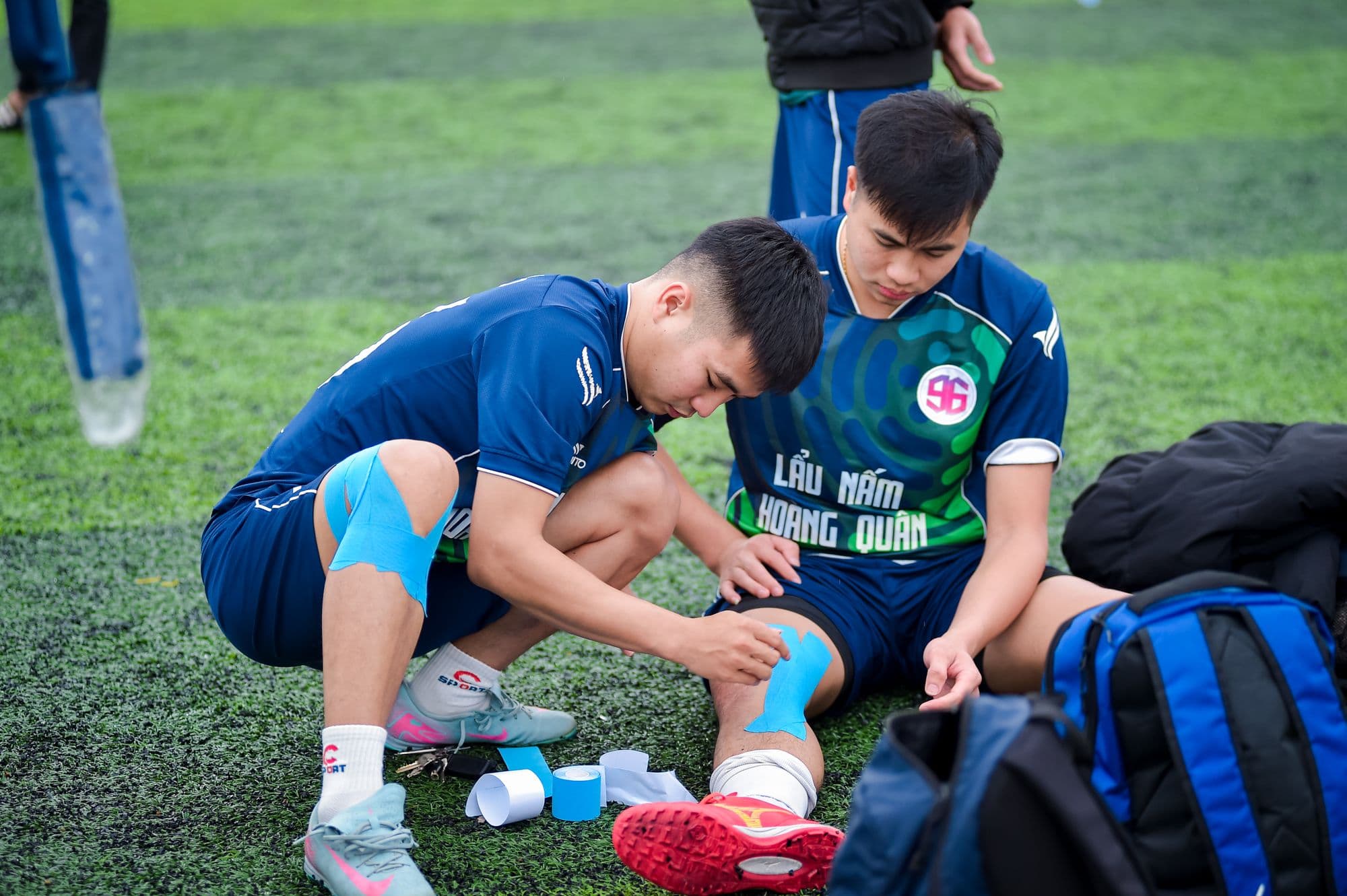
An athletic trainer on site means an injury is assessed by a clinician within minutes: a sprain taped and an athlete safely returned, or a suspected concussion recognized and held out — the decision that matters most and is hardest for a coach to make alone.
Injury-prevention screening
For teams we run movement screens (FMS and SFMA) that look at how athletes squat, lunge, hinge and balance, and flag the patterns associated with injury. We are honest about what a screen can and cannot do: it does not predict who will be injured with any precision, but it reliably finds the athlete with one leg much weaker than the other, or the shoulder that cannot get overhead — and those are worth fixing before the season does it for you.
Where the evidence is strongest is in structured warm-up and neuromuscular programs. Football programs such as FIFA 11+ reduced overall injury rates by roughly a third in a systematic review, and similar programs lower ACL injury risk in adolescent athletes. We build these into team training when we are asked to.
Concussion testing and management
We offer baseline testing so that, after a head injury, an athlete's results can be compared with their own normal rather than a population average. Management follows the current international consensus: a physician diagnoses, relative rest for 24–48 hours, then a stepwise return to school and sport with medical clearance before contact. Our concussion page under Conditions covers this in detail, including the symptoms that mean an emergency department.
Return to sport
Restore
Range of motion, swelling control and basic strength — the foundation, done properly rather than quickly.
Rebuild
Progressive strength and power, single-leg control, and the specific movement demands of your sport.
Test
Strength symmetry, hop tests and sport-specific drills, measured against your uninjured side and your position's demands.
Return
A graded return to training, then competition, with the numbers to back the decision and the athletic trainer in the loop.
Education for coaches, parents and athletes
We give talks and training on concussion recognition, injury prevention and body mechanics for the people who see young athletes every day. A coach who knows what a concussion looks like, and a parent who knows that a limp is not something to play through, prevent more injuries than any clinic can treat.
FAQ
Common questions
- How do we book an athletic trainer for our event or team?
- Call our main office at (973) 887-9000 and ask for sports medicine coverage. Tell us the sport, the dates, the number of participants and the venue, and we will put a proposal together.
- Do injury-prevention screens actually prevent injuries?
- Screens on their own do not; the exercise programs built from them do. Structured neuromuscular warm-up programs have reduced injury rates by roughly a third in football and lowered ACL injury risk in adolescent athletes in systematic reviews. A screen tells us which athletes and which weaknesses to prioritize.
- When can I return to sport after an injury?
- When you pass the tests, not when the calendar says so. For most injuries that means strength close to your uninjured side, symmetrical hop tests, and sport-specific drills without symptoms. After ACL reconstruction, that is typically nine to twelve months.
- Is sports medicine only for competitive athletes?
- No. Sports injury rehabilitation and injury prevention are offered at every SportsCare clinic, and the same return-to-activity approach applies whether the activity is varsity soccer, a 5K, or the garden.
Sources
The clinical claims on this page are drawn from the following. Where the evidence is limited, we say so above rather than round it up.
- 1.Effect of specific exercise-based football injury prevention programmes on the overall injury rate in football: a systematic review and meta-analysis of the FIFA 11 and 11+ programmes — British Journal of Sports Medicine, 2017
- 2.Consensus statement on concussion in sport: the 6th International Conference on Concussion in Sport — Amsterdam, October 2022 — British Journal of Sports Medicine, 2023
- 3.Anterior Cruciate Ligament (ACL) Injuries — OrthoInfo, American Academy of Orthopaedic Surgeons
Talk to a therapist about sports medicine
Availability varies by clinic. Call the location nearest you and the front desk will tell you whether it is offered there and whether it suits your condition — or reach our main office at (973) 887-9000.
64 clinics across New Jersey, New York and Florida.