
Services
Pediatric Therapy
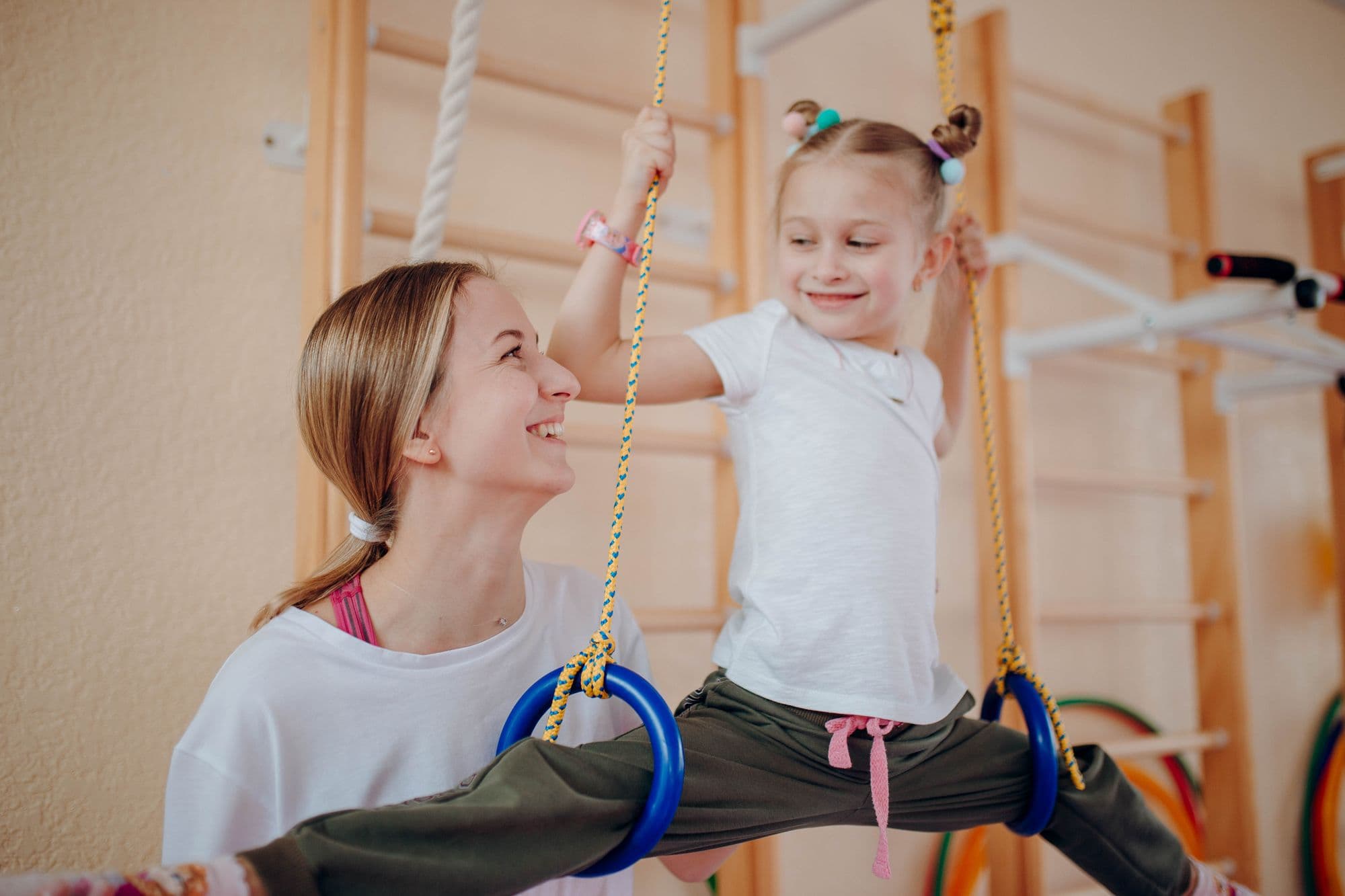
Children are not small adults, and their therapy should not look like a smaller version of ours. Pediatric physical therapy at SportsCare is play-based, family-centered, and built around milestones and function — rolling, sitting, walking, keeping up on the playground — with parents in the room and part of the plan.
Why SportsCare
Why families choose SportsCare and KidsCare
A pediatric team since 2001
The KidsCare Institute has provided school-based and clinic-based pediatric therapy in Hudson County since 2001, with a fully equipped pediatric gym in West New York where parents can watch every session.
Parents in the room, always
You are not sent to a waiting room. What happens in a 45-minute session matters far less than what happens in the 10,000 minutes a week at home, so we teach you the plan as we go.
One team around the child
We work with your pediatrician, orthopedist, teachers and coaches, and with our own occupational therapists when a child needs both.
What we treat
Congenital muscular torticollis and head-shape asymmetry in infants. Developmental delay and gross motor skill deficits — late rolling, sitting, crawling or walking. Hip dysplasia, in and out of a brace. Toe walking. Balance and coordination difficulties. Tone abnormalities, including the movement needs of children with cerebral palsy and other neurological diagnoses. Orthopedic injuries and fractures in children and teenagers. Post-surgical rehabilitation. Sports injuries and growth-related pain in adolescents.
Torticollis: why early matters
A baby who always tilts or turns to one side has, most often, a tight neck muscle — congenital muscular torticollis. It is common, very treatable, and the treatment works best when it starts early. The 2024 clinical practice guideline from the Academy of Pediatric Physical Therapy recommends referral as soon as it is noticed: infants who start therapy in the first months typically resolve in weeks; those who start after six months take longer and are more likely to need a helmet for head shape or, rarely, surgery.
Treatment is gentle stretching and positioning, taught to you and done at home through the day, with regular checks on head shape and milestones.
What a visit is like
Evaluation through play
We watch how your child moves, reaches, sits, stands and plays, and measure what needs measuring. For infants that is on a mat with you beside them; for older children it is a gym.
Goals that mean something
Not 'improve hip abduction' but 'climb the slide at the park'. Goals are set with you and written in your words.
Sessions that look like play
Obstacle courses, balls, swings, songs. The therapy is inside the game, and a child who wants to come back is a child who progresses.
A home program you can actually do
Short, specific, built into routines you already have — diaper changes, bath time, the walk to school.
Where it is offered
Pediatric physical therapy is offered at the KidsCare Institute clinic in West New York and at select other SportsCare clinics; the KidsCare team also provides school-based therapy in Hudson County schools. Call any clinic and the front desk will direct you to the nearest pediatric therapist. No referral is needed to start in New Jersey, New York or Florida, though many pediatricians will provide one and some insurance plans require it.
FAQ
Common questions
- My baby always looks to one side. Should I wait and see?
- No — have it looked at. Congenital muscular torticollis resolves fastest when treatment starts in the first months of life. The current clinical practice guideline recommends referral as soon as a head tilt or preference is noticed.
- How do I know if my child's development is delayed?
- Milestones vary, but not sitting by about 9 months, not walking by 18 months, or losing a skill they had are reasons to talk to your pediatrician and to have a pediatric physical therapy evaluation. Early evaluation costs a visit; waiting can cost months.
- Can parents stay in the room?
- Yes, always. Parents are part of every session, and the home program is taught to you directly. The West New York clinic's gym is designed so you can observe without interrupting.
- Do you treat teenagers' sports injuries?
- Yes. Adolescent sports injuries, growth-related pain such as Osgood-Schlatter and Sever's disease, and return-to-sport rehabilitation are offered at every SportsCare clinic.
Sources
The clinical claims on this page are drawn from the following. Where the evidence is limited, we say so above rather than round it up.
- 1.Physical Therapy Management of Congenital Muscular Torticollis: A 2024 Evidence-Based Clinical Practice Guideline From the Academy of Pediatric Physical Therapy — Pediatric Physical Therapy, 2024
- 2.Developmental Dysplasia (Dislocation) of the Hip (DDH) — OrthoInfo, American Academy of Orthopaedic Surgeons
- 3.Your baby's development — NHS
Where we offer pediatric therapy
This program runs at one of our clinics. Call ahead to check availability.
West New York
West New York, NJ
(201) 854-5511
Talk to a therapist about pediatric therapy
Availability varies by clinic. Call the location nearest you and the front desk will tell you whether it is offered there and whether it suits your condition — or reach our main office at (973) 887-9000.
64 clinics across New Jersey, New York and Florida.